SpecDesk
From app idea to a buildable plan in about two minutes: AI agents interview the founder, then write the features, screens, stack, timeline and price, with downloads and a booking link. Next.js and FastAPI, with seven LangGraph agents.
- Product
- AI project planner for agencies
- Built with
- Next.js, FastAPI, LangGraph
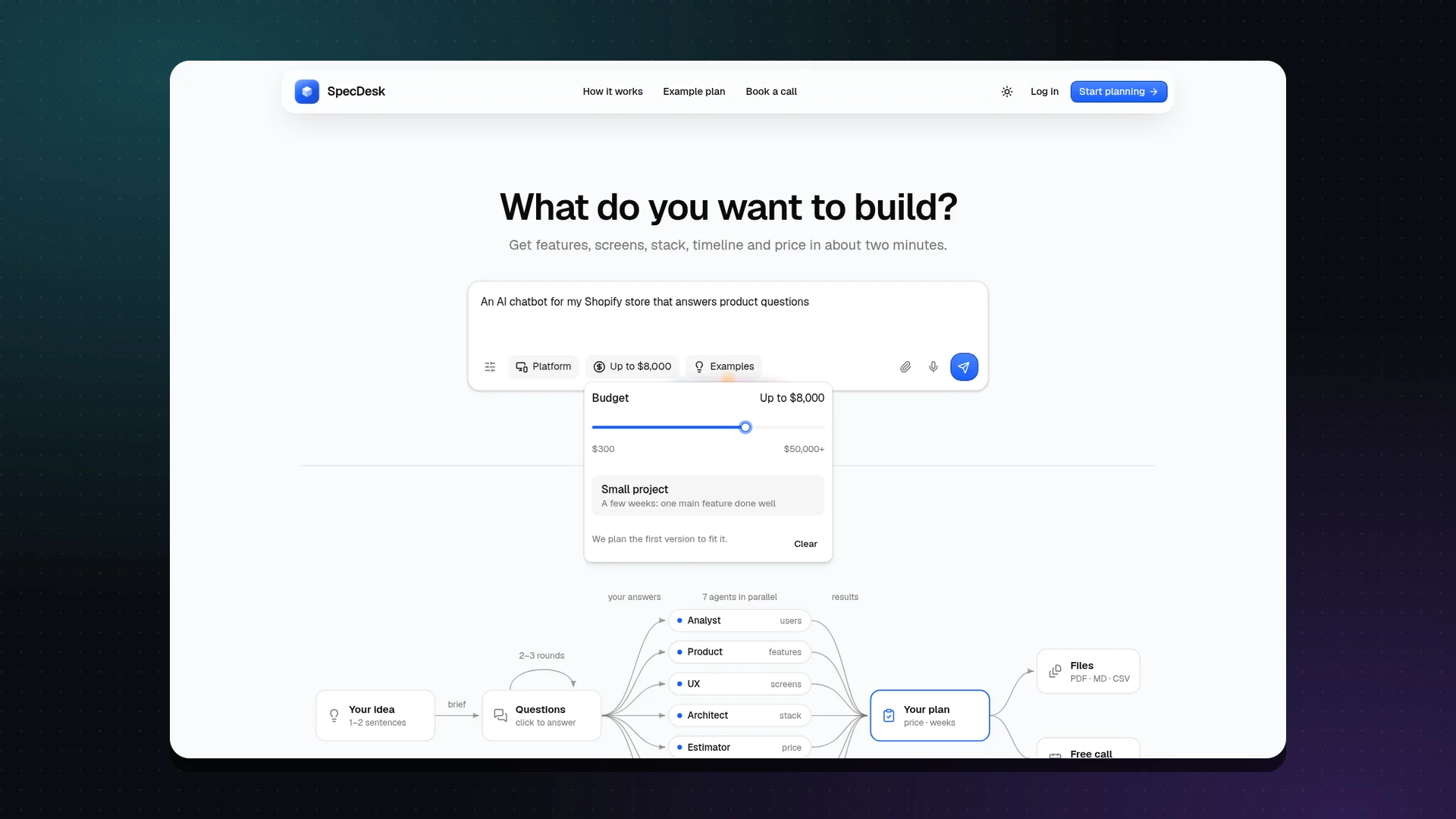
planning agents, some running in parallel
from idea to a buildable plan
prices set by the AI: a rule engine decides
The problem we set out to solve.
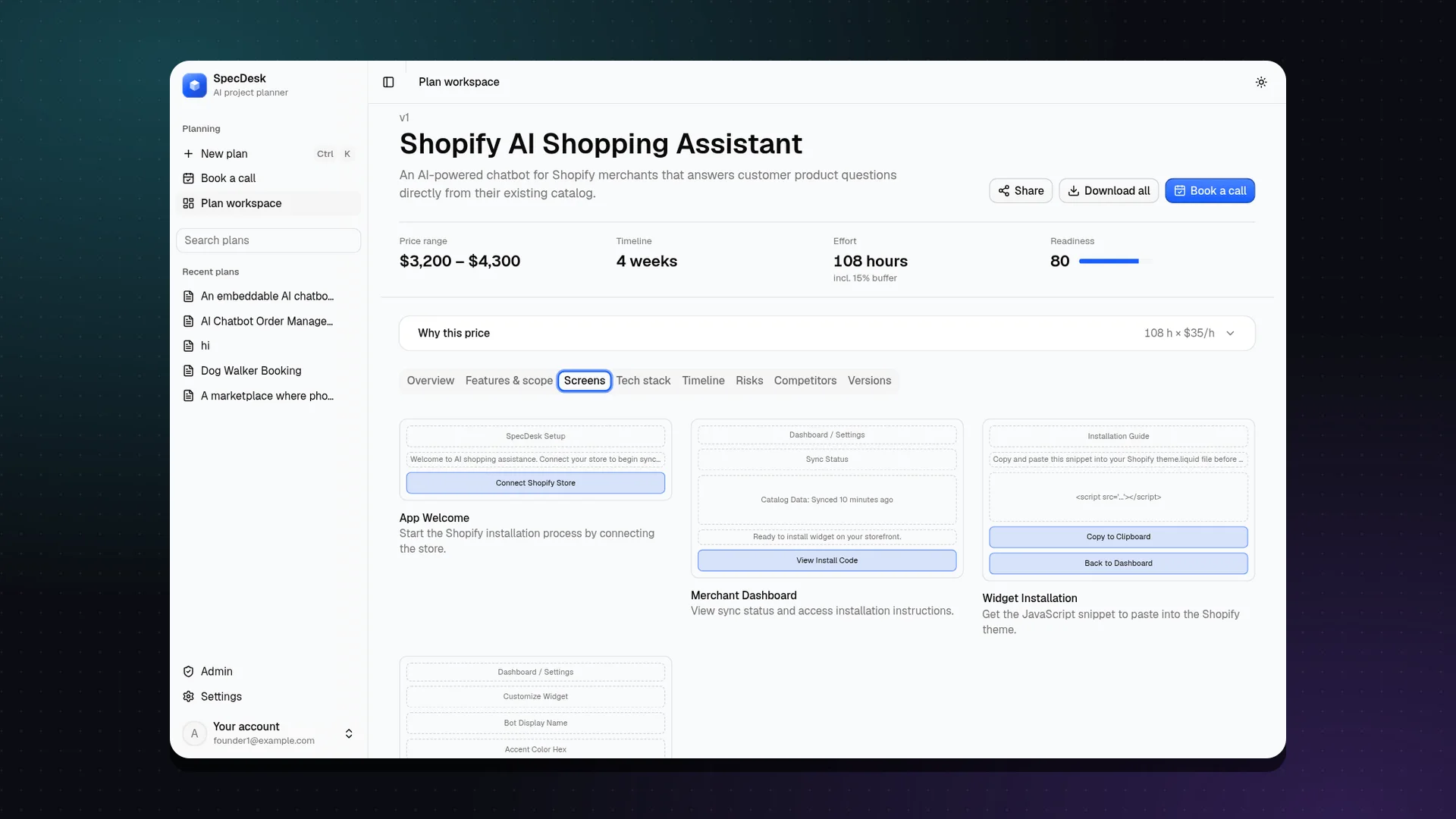
A founder types an app idea and sets a budget. An interviewer agent asks a few rounds of questions, each with a recommended answer, then seven planning agents write the plan: features, screens with wireframes, tech stack, timeline, risks and price. The founder can tweak the scope, download everything, and book a call with the agency.
- Turn a vague, one-line idea into a plan a team could actually build from.
- Ask the right questions without making the founder fill in a long form.
- Give a price people can trust: the AI should never just make one up.
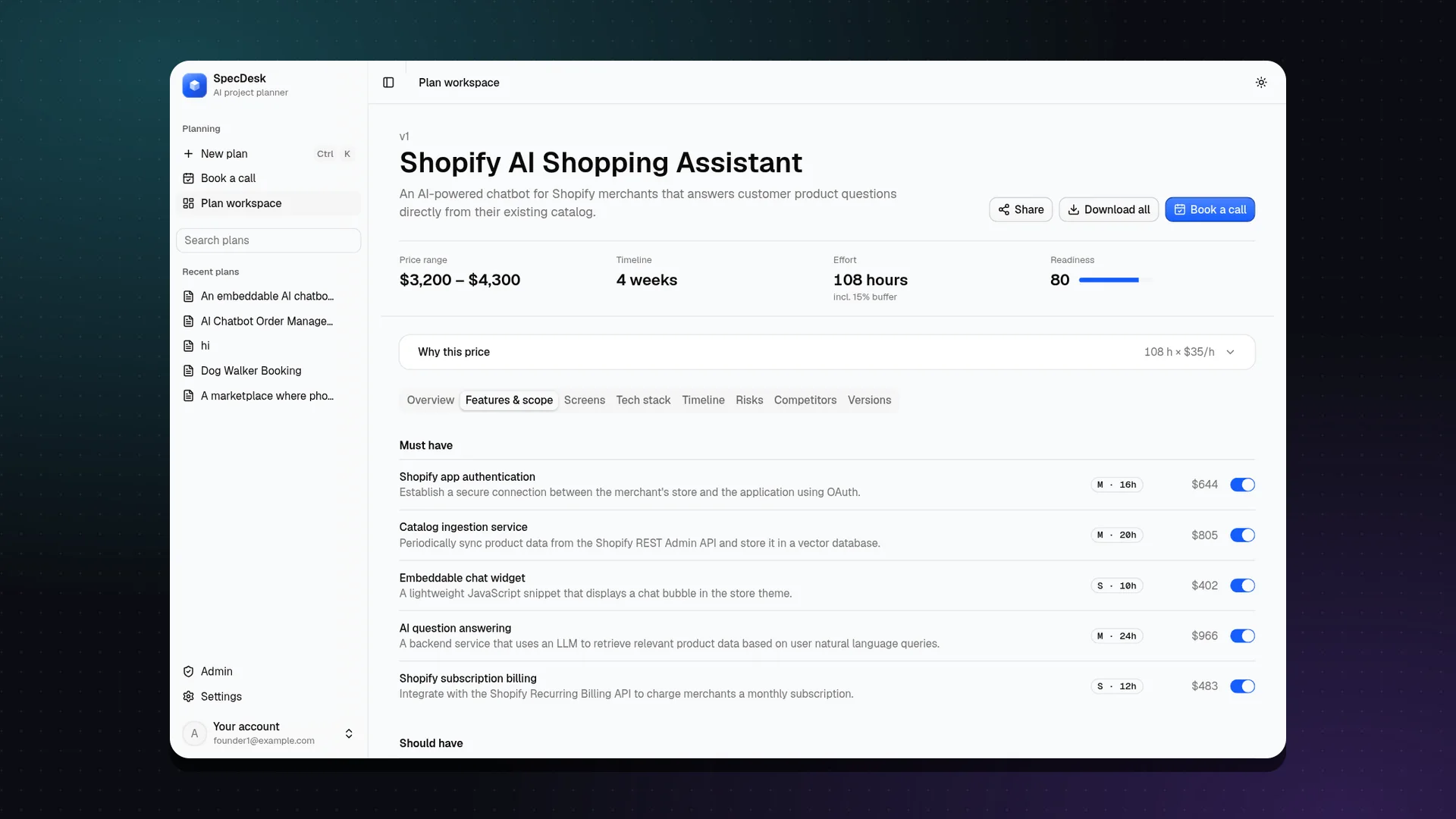
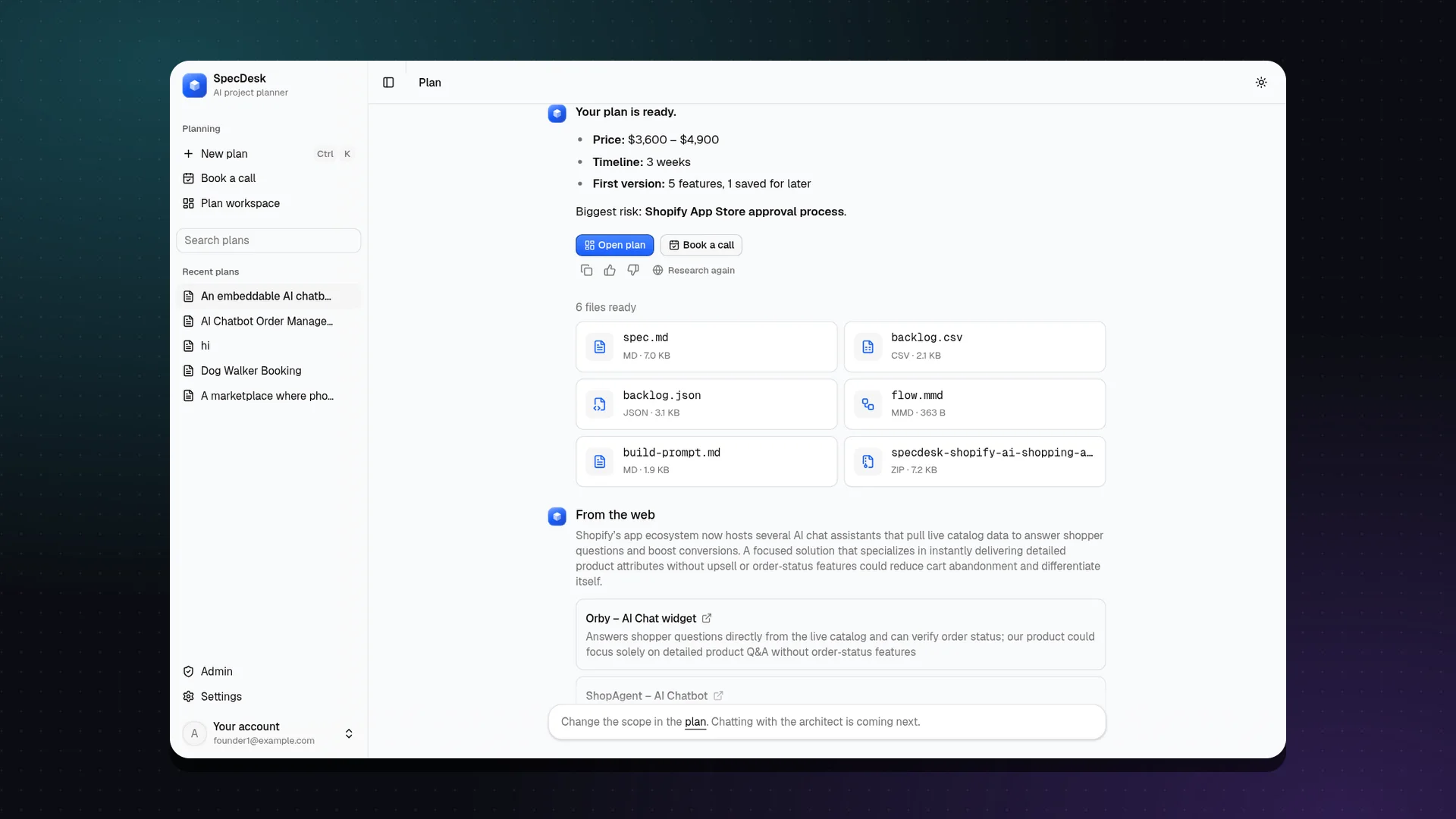
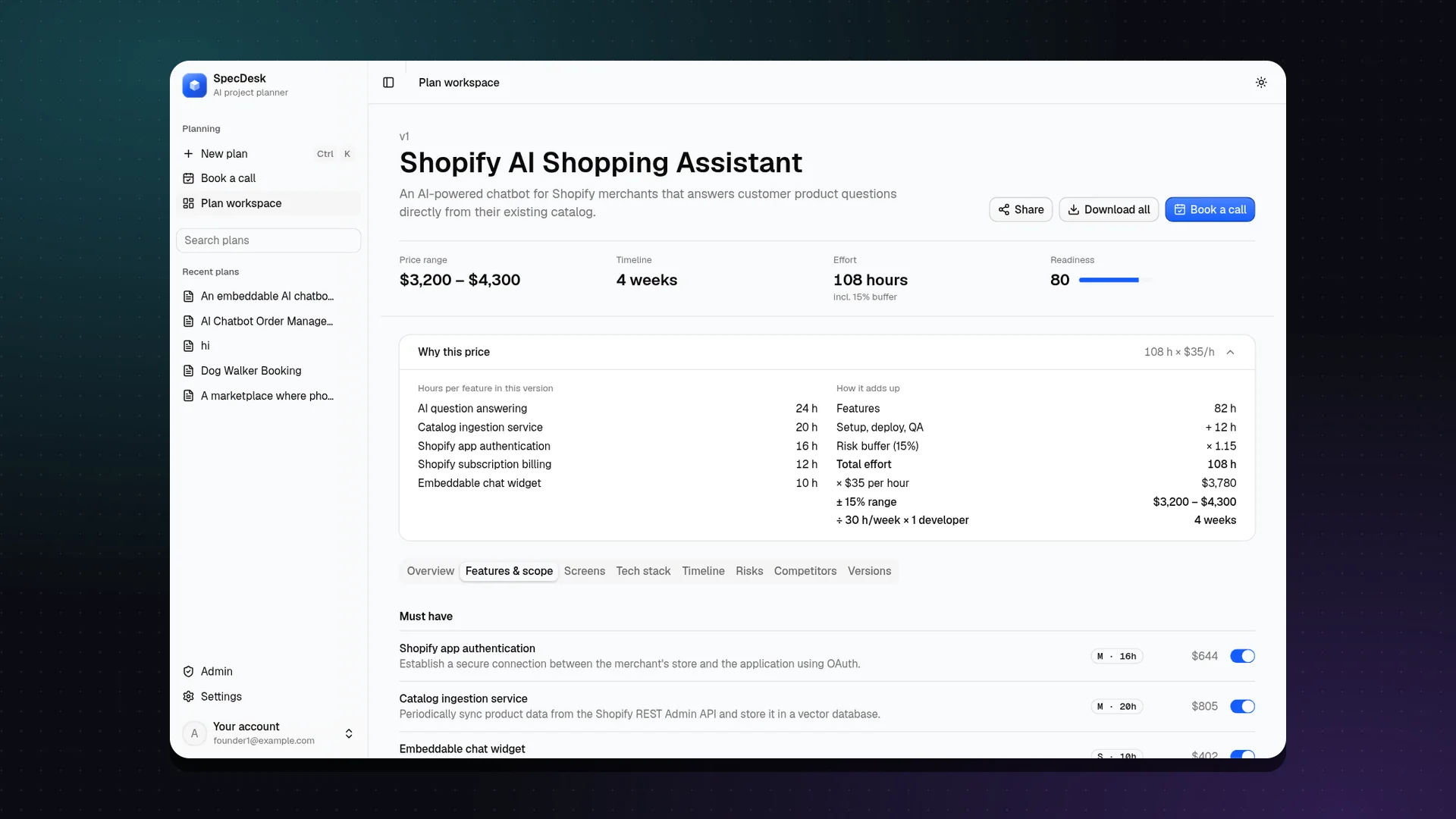
Every part, built to work in the real world.
Front desk and interview
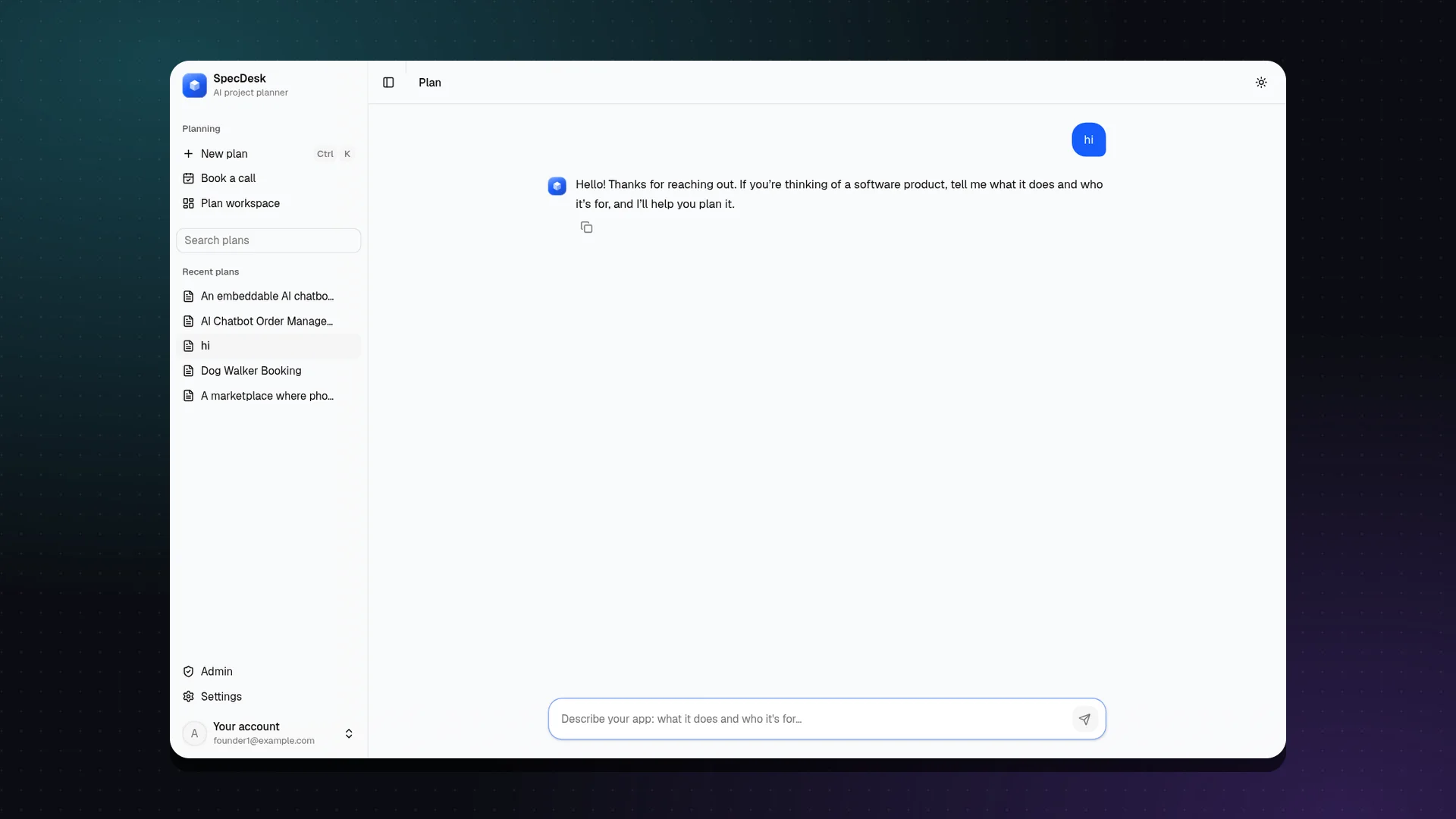
A front-desk agent answers small talk and waits for a real idea; then an interviewer asks rounds of questions, each with a recommended answer and clickable options.
Planning agents in parallel
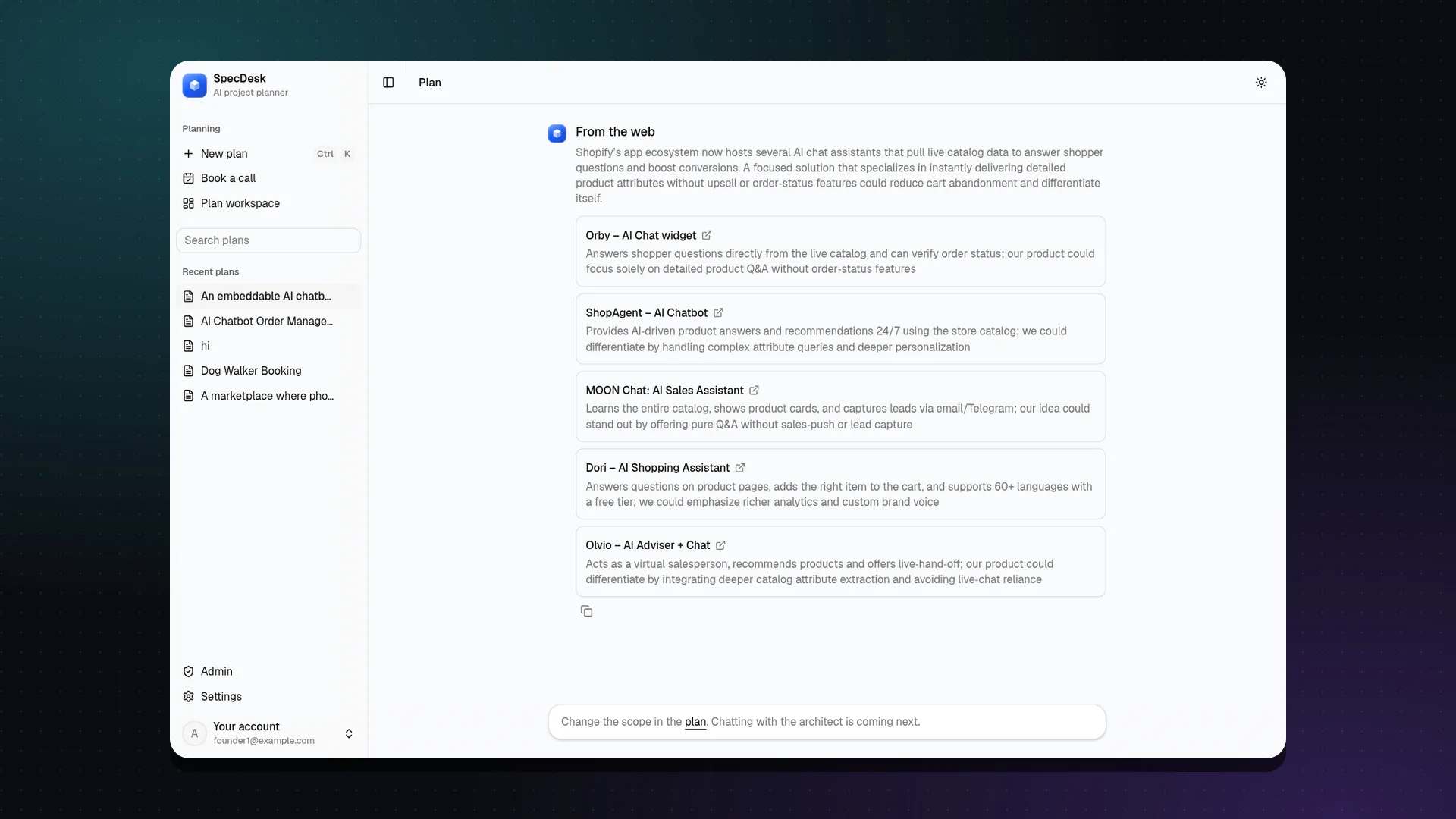
Analyst, product, UX, architect, estimator, backlog and critic on LangGraph, plus a researcher that finds real competitors on the web.
Rule-based pricing
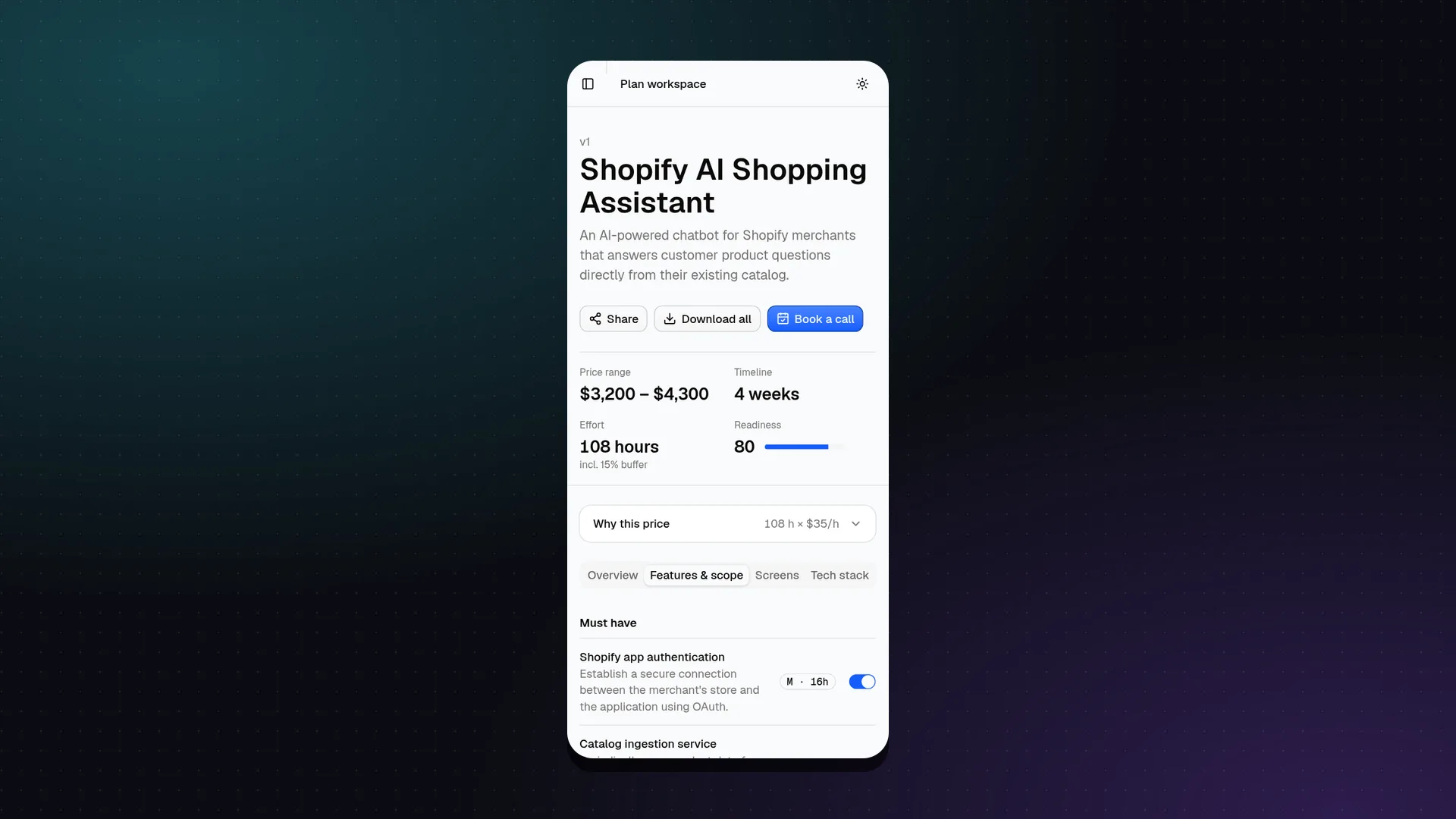
The AI scores complexity; price and weeks come from a rule engine, and “Why this price” shows every step.
Plan workspace
Switch features on or off and the price updates. Every change is saved as a new plan version.
Downloads
spec.md, backlog CSV and JSON, a flow diagram and a build prompt, or everything as one ZIP.
Admin with full model control
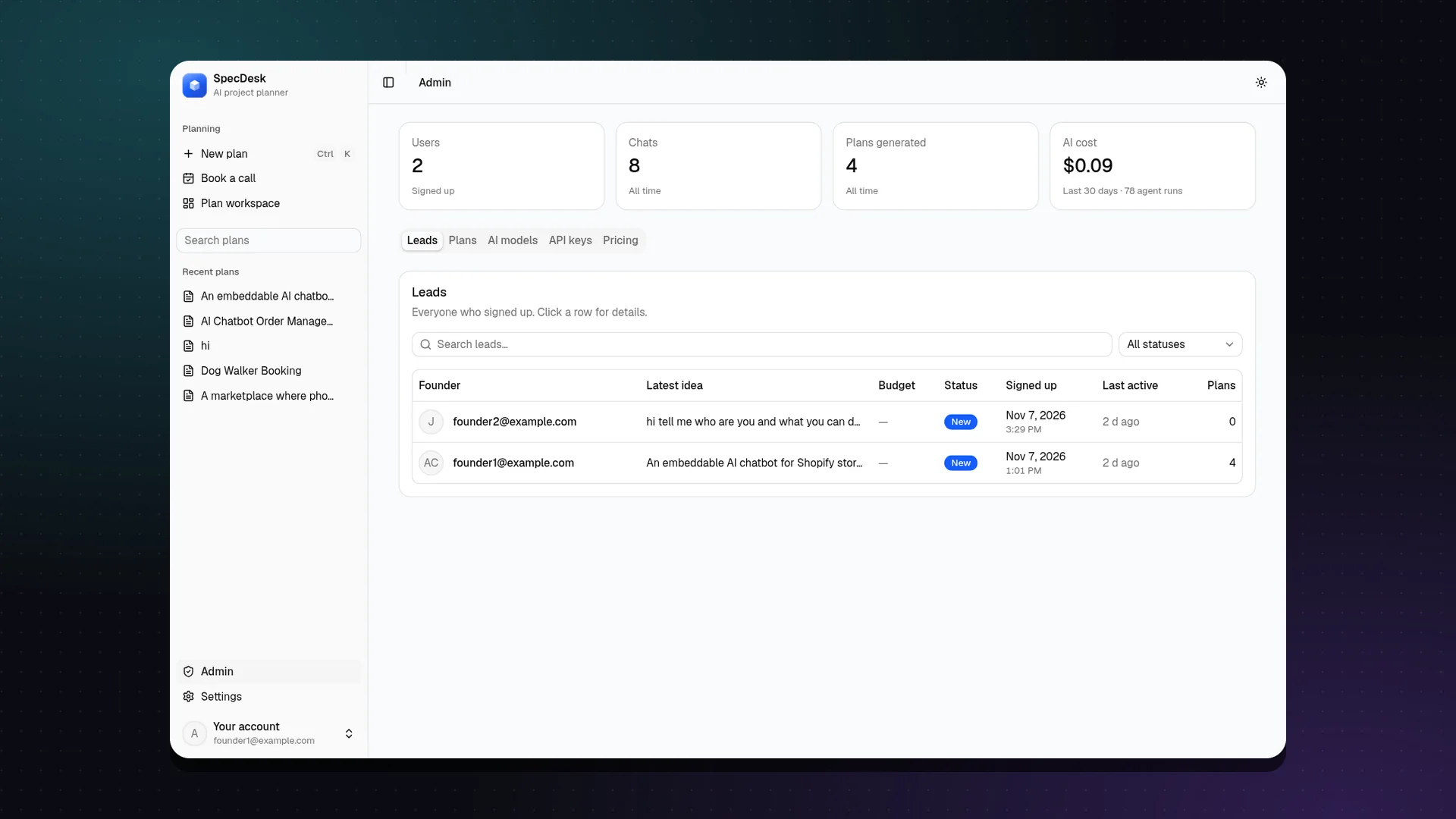
Leads and plans, encrypted provider keys, a model per agent with fallbacks, and the cost of every model call tracked.
A Next.js front end talks to a FastAPI backend, where one LangGraph graph runs each planning session. The interview pauses for the founder's answers and resumes exactly where it stopped, with state kept in a Postgres checkpointer, so a refresh or a redeploy loses nothing. Agents on the same level run in parallel and stream their progress to the browser. Money and weeks are always computed in code from a YAML rule file, never by the model.
- Next.js 16 & React 19Web app with Tailwind CSS v4 and shadcn/ui
- FastAPIPython 3.12 API, managed with uv
- LangGraph & LangChainInterviewer and planning agents, Postgres checkpointer
- GroqDefault model provider (Anthropic optional)
- Neon PostgresData with SQLAlchemy 2 and Alembic migrations
- Better AuthSign-in with a one-time email code
- Brevo & CalendlyEmail delivery and call booking
An open-source planner that turns an idea into a priced, buildable plan in about two minutes, with every price explained and a direct path to booking a call.
 Up next · Prefolk
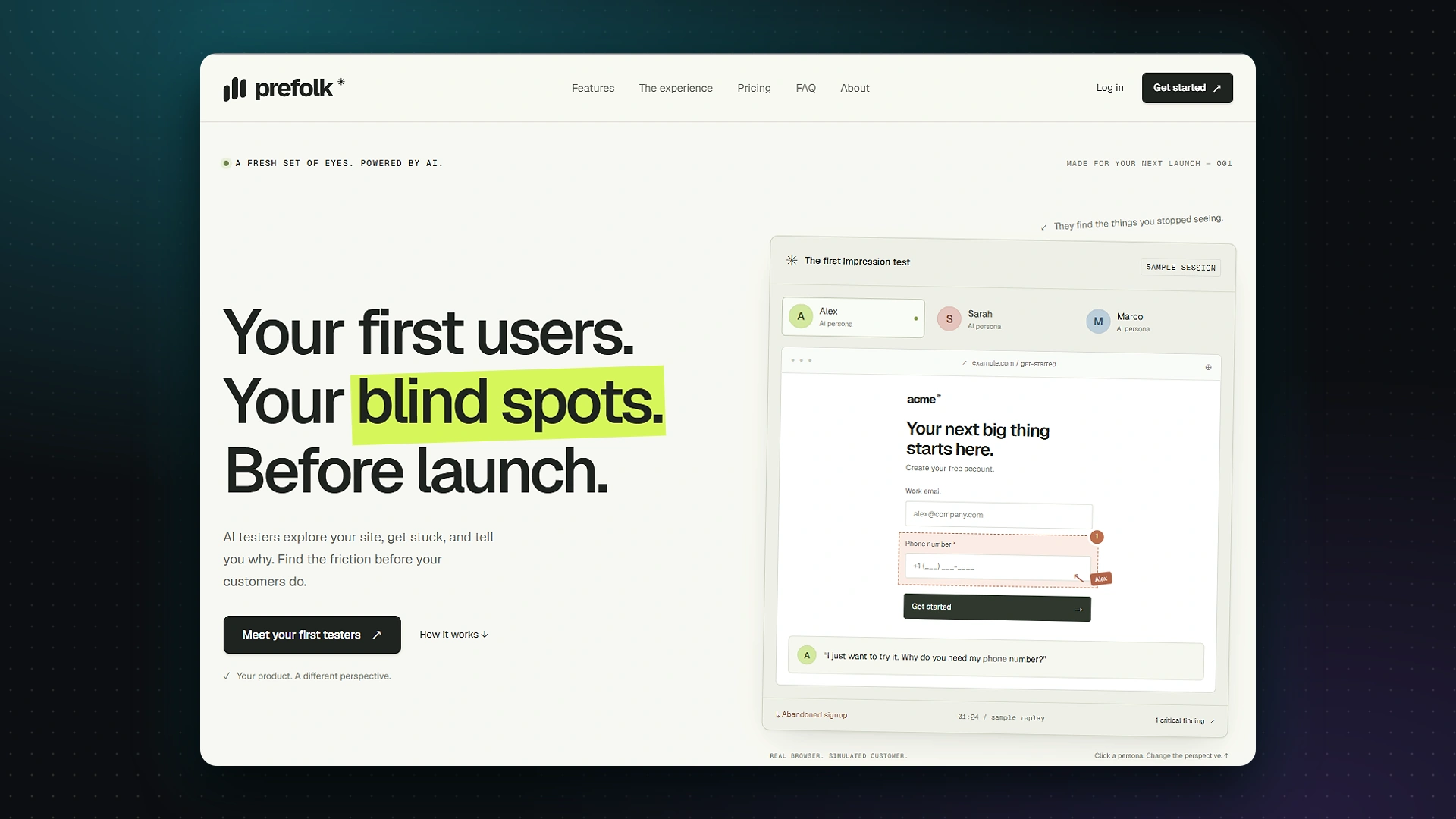
Prefolk
AI user-testing SaaS
Have an idea? Let's build it.
Tell us what you want to build. You'll get a clear plan, a timeline and a fixed price within a week.